How to Hire a Home Health Aide in 2026: Agency Guide
Hire home health aides at volume in 2026: job description, certifications, salary, interview questions, and 90-day onboarding that beats 75% turnover.

Ernest Bursa
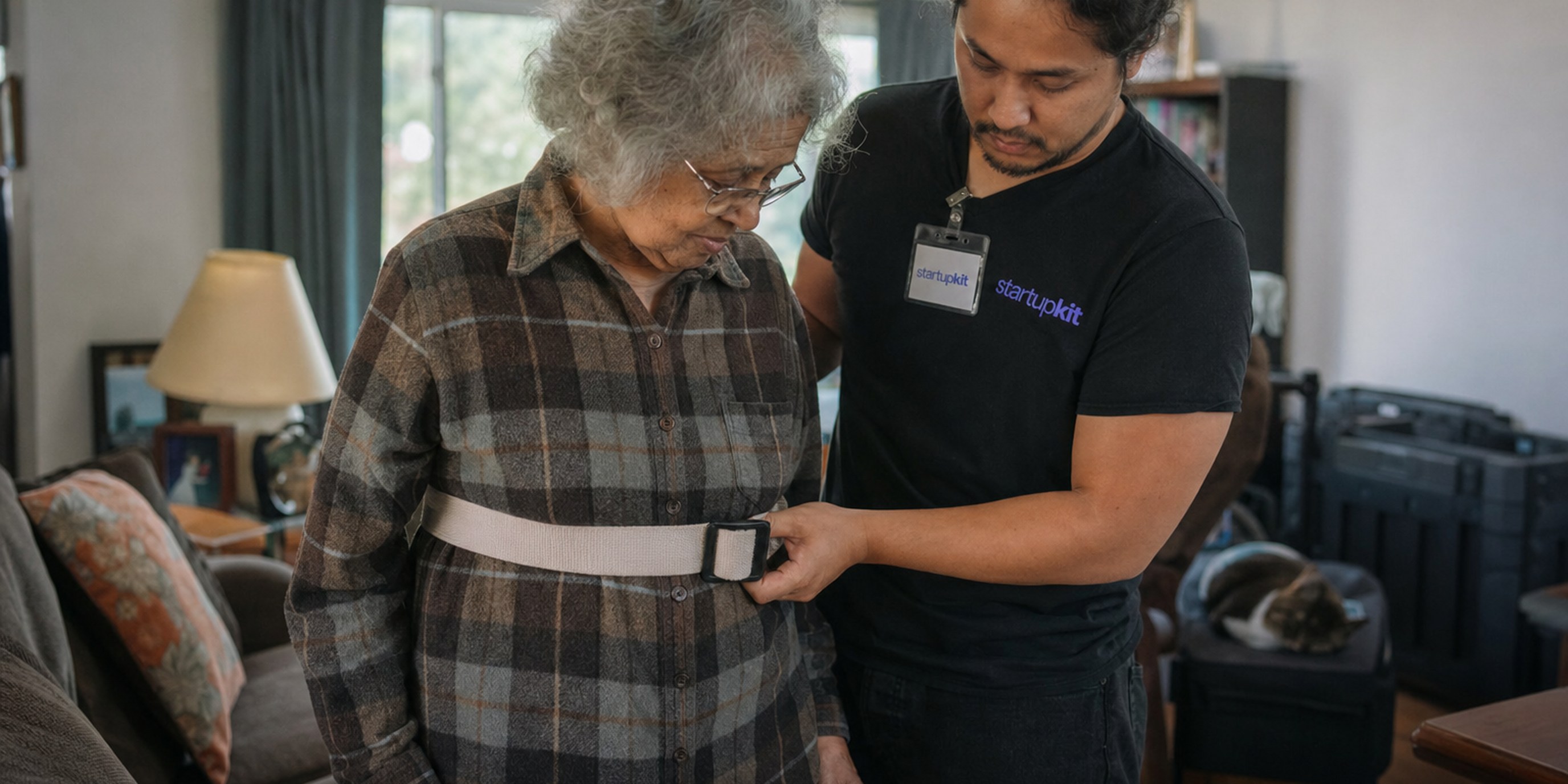
To hire a home health or personal care aide, write a duties-specific job description, source from employee referrals and high-intent caregiver job boards, contact every applicant within 24 hours, run mandatory background and registry checks, verify state-required training (75 or more hours for Medicare and Medicaid agencies), and invest in structured 30/60/90-day onboarding to survive an industry turnover rate near 75%. The hard part is not finding one good caregiver. It is re-filling the same seat, over and over, faster than your competitors while keeping the people you already hired.
Home Health and Personal Care Aides are the single largest occupation in the United States, with roughly 4.3 million jobs in 2024, according to the Bureau of Labor Statistics Occupational Outlook Handbook. The BLS projects about 765,800 openings every year through 2034, the most of any occupation it tracks. That number is driven less by growth and more by churn. If you run an agency, this guide treats hiring as what it actually is for you: a continuous, high-volume pipeline run against brutal turnover and thin margins, not a one-time search.
Why home care hiring is a volume and retention problem
Home care hiring is a throughput problem, not a scarcity problem. You will receive applicants. The challenge is contacting them fast, screening them safely, and keeping them past day 100, because most new caregivers leave before then.
The demand picture is staggering in scale. The role is projected to grow 17% from 2024 to 2034, much faster than the all-occupation average, and to reach roughly 5 million workers (BLS Occupational Outlook Handbook). But growth is only part of why those 765,800 annual openings exist. The bigger driver is replacement. The industry turnover rate sat at 75% in the 2025 Activated Insights Benchmarking Report, with the Home Care Association of America (HCAOA) reporting sector estimates trending toward 80%. Roughly 70% of newly hired caregivers leave within their first 100 days (ShiftCare, 2026). You do not fill this role once. You re-fill it constantly.
The funnel is leaky and low-yield. At the median home care agency, 800 applicants produced 195 interviews and 63 hires, an applicant-to-hire conversion of about 7.9% (Activated Insights). Only about a quarter of applicants reach an interview. Speed of contact is the single biggest lever you control, because the best caregivers accept the first agency that calls them back.
And the shortage is near-universal. About 95% of home- and community-based care providers report moderate or severe staffing shortages, and 77% have turned away new client referrals because they could not staff them (Commonwealth Fund, 2024). Every unstaffed referral is lost revenue, not just an HR inconvenience. That is why the rest of this guide indexes on two things: funnel velocity and retention.
Who you are hiring: HHA vs PCA vs caregiver
Buyers conflate three terms, and the distinction matters because it changes what the hire can legally do and what training they need. A Personal Care Aide (PCA) provides non-medical support. A Home Health Aide (HHA) does everything a PCA does plus basic health-related tasks under supervision.
Here is the practical breakdown:
- Personal Care Aide (PCA), often just called a caregiver. Non-medical work: companionship, light housekeeping, meal prep, errands and driving, and help with Activities of Daily Living (ADLs) such as bathing, dressing, grooming, toileting, and mobility.
- Home Health Aide (HHA). Everything a PCA does, plus health-related tasks under a nurse’s supervision: checking vital signs like blood pressure, assisting with prescribed exercises, and monitoring and reporting changes in a client’s condition (BLS Occupational Outlook Handbook).
- The SOC code. Federal data combines both under SOC 31-1120, which merges the legacy Home Health Aide and Personal Care Aide codes. Every demand number above comes from that combined code.
Get the title right in your job posting. A PCA req that quietly expects HHA-level clinical tasks will either scare off qualified PCAs or create compliance exposure when an unqualified hire performs work they are not trained or certified to do.
What a home health aide actually does
A strong job description describes concrete duties, not vague traits. Caregivers screen agencies the same way candidates screen any employer, and a generic posting (“must be compassionate and reliable”) reads as a red flag for a chaotic workplace.
Build your job description around five duty blocks:
- ADL assistance. Bathing, dressing, grooming, toileting, and transfers or mobility support. This is the physical core of the role.
- Household support. Light housekeeping, laundry, meal preparation, and grocery shopping.
- Health monitoring (HHA roles). Taking vital signs, documenting changes, and reporting them to the supervising nurse or family.
- Companionship and emotional support. Conversation and engagement that reduces client isolation. This is real work, not filler.
- Transportation. Driving to appointments and errands where the role requires it. State the driver’s license and auto insurance requirement explicitly.
Be specific about the caseload. Listing the conditions a caregiver will encounter (dementia, mobility limits, post-surgical recovery) lets candidates self-select and reduces the mismatched applicants you have to screen out later.
Certifications, licensure, and compliance you cannot skip
This is the highest-stakes section, because getting it wrong creates Medicare and Medicaid billing and survey risk that dwarfs any recruiting savings. The federal floor is 75 hours of training for HHAs at agencies receiving Medicare or Medicaid funding, and background screening is non-negotiable.
Training hours
The federal minimum is 75 hours of training for HHAs at Medicare- and Medicaid-funded agencies, including at least 16 hours of supervised practical or clinical training, plus 12 hours of continuing education each year. That CMS rule has been essentially unchanged for about 30 years.
State requirements vary, so verify the specific state. According to PHI National, 33 states require no more than the 75-hour federal minimum, 17 states and DC exceed it, and only 6 states and DC meet the National Academy of Medicine’s recommended 120 hours. Note that PHI updates these counts periodically, so confirm the current figure for your state before you rely on it. Private-pay agencies that take no Medicaid often face no formal state training mandate, which means the burden of standardized onboarding falls entirely on you.
Background and registry screening
This is where shortcuts become liabilities. At minimum, run:
- A criminal background check, ideally fingerprint-based state and federal (FBI) searches. States in the National Background Check Program require this for HHAs (GoodHire).
- The OIG List of Excluded Individuals and Entities (LEIE). Billing for an excluded individual triggers federal penalties.
- State abuse and neglect registries (such as Adult Protective Services findings) and the sex offender registry.
Common disqualifiers include violent crime, sexual abuse, healthcare fraud, and drug-related offenses, along with discrepancies in employment or education history and prior neglect complaints (GoodHire, DISA).
Electronic Visit Verification
The 21st Century Cures Act, section 12006(a), mandates Electronic Visit Verification (EVV) for all Medicaid personal care services (since January 1, 2020) and home health services (since January 1, 2023). EVV records who delivered the service, to whom, what was done, where, and the start and end time (Medicaid.gov). Train every new hire to clock in and out compliantly from day one. EVV runs in your field-operations and scheduling system, not your ATS, but the training belongs in onboarding.
Nice-to-have credentials
CPR and First Aid certification, dementia or Alzheimer’s care training, and a valid driver’s license with auto insurance for transport roles all strengthen a candidate without being universal requirements.
Where to source caregivers at volume
Rank your sourcing channels by signal and return, then widen the top of the funnel. Because conversion runs near 7.9%, you need both more applicants and a faster way to reach them.
| Channel | Why it works | Notes |
|---|---|---|
| Employee referrals | Highest return and best retention; pre-vetted, higher-trust hires | Pay referral bonuses. This is the top source at many agencies (CareAcademy). |
| Caregiver-specific boards | Higher intent than generic boards | Specialized caregiver boards, plus large boards for volume |
| Community networking | Reaches people who never check job boards | Clergy, hospitals, senior centers, job fairs, open houses |
| Word of mouth and reputation | Compounds when you treat caregivers well | Above-market pay, respect, and recruiters with caregiving backgrounds drive referrals |
The most important sourcing insight is counterintuitive: loosen rigid screening at the top of the funnel. Industry guidance is explicit that you should call every applicant, even those without experience, within hours, because high-quality caregivers are routinely lost to slow or no contact (CareAcademy). Hire for soft skills like empathy, patience, and reliability, then train the technical tasks. Kit also provides the hiring pipeline for reviewing applications and managing the next steps.
How to screen and interview for reliability and safety
Two filters matter most for this role: reliability and safety, and temperament. Skills can be trained. Showing up on time and behaving safely in a vulnerable person’s home cannot be faked, so screen for them directly.
The signals worth chasing
- Reliability. A stable work history, a realistic transportation plan, and honest talk about which schedules they can actually keep.
- Empathy and communication. Watch how a candidate describes past clients. Warmth and specificity are good signs; contempt or vagueness are not.
- Self-protective curiosity. A strong caregiver interviews you too, asking about the client, escalation paths, and support. If a candidate asks nothing, treat that as a red flag (Family & Personal Care).
Scenario questions that surface judgment
Generic questions get rehearsed answers. Scenario questions reveal how someone actually thinks:
- “A client falls while you are alone with them. Walk me through your first three actions.” (Safety judgment.)
- “When would you call 911 versus calling the family or the office first?” (Escalation judgment.)
- “Tell me about a difficult client or family member and how you handled it.” (Temperament under stress.)
- “Your shift starts at 6 a.m. across town. How do you make sure you are there on time?” (Reliability realism.)
- “What experience do you have with dementia, mobility limits, or [the conditions in your caseload]?” (Fit.)
Verify before you hire
Contact references directly, verify training and certifications, and where possible run a supervised trial shift to observe real behavior and body language with a client (ElderLawAnswers). A trial shift tells you more than three interviews.
Consistency is the hidden problem here. When five different coordinators screen applicants on gut feel, you get five different bars and a lot of avoidable bad hires. This is exactly where a shared system helps. In Kit, every coordinator works from the same structured scorecard, and the team can review and vote on candidates in one place, so your screening bar stays the same whether the applicant came in on a Tuesday morning or a Saturday night. Interview scheduling is built in, so coordinating trial shifts and interviews does not turn into phone tag.
What it costs: home health aide salary benchmarks
The national median pay for the combined role was $34,900 per year, about $16.78 per hour, in May 2024 (BLS Occupational Employment and Wage Statistics). Treat that as an anchor, not an offer, because geographic variance is large and a national median misleads at the local level.
The spread between states is wide. Top-paying states reach the $44,000 to $48,000 range, with Washington near $48,210 and Oregon near $44,650, while the lowest-paying states sit near $24,000 to $26,000, such as Louisiana around $24,430 (industry aggregator data). Some commercial sources cite a higher national average near $36,120, but that is an average, not the BLS median, so do not conflate the two.
Pay is also moving. Home care aides received a 4.93% pay increase on average in 2025 (LeadingAge). When you set an offer, account for metro cost of living, Medicaid reimbursement caps, shift differentials, and any specialty premium for skills like dementia care. For families who hire privately rather than through an agency, market rates run roughly $21 to $50 per hour with a national median near $33, reflecting agency overhead, supervision, and insurance (U.S. News, A Place for Mom).
Check current BLS OEWS figures for your state and metro before you post. The point is simple: in a market this tight, an offer benchmarked to a national median will lose to a competitor who priced to the local one.
Common home care hiring mistakes
Most agency hiring failures come down to a handful of repeatable mistakes. Avoiding them is cheaper than any sourcing campaign.
- Slow first contact. In a 7.9%-conversion funnel, waiting days to call applicants hands your best caregivers to faster competitors. Speed is the cheapest competitive advantage you have.
- Over-rigid screening. Requiring every credential up front filters out trainable, high-empathy candidates. Hire for soft skills and train the rest (CareAcademy).
- Treating onboarding as paperwork. With roughly 70% of new hires gone by day 100, a transactional first week is the single biggest retention failure point.
- Ignoring schedule fit. Erratic schedules and long, uncompensated travel drive early quits, especially for a workforce that needs stable hours and transportation support.
- Compliance gaps. Missing an OIG LEIE check, a registry check, or EVV training creates billing and survey exposure far larger than any recruiting saving.
- Hiring to fill, not to keep. Agencies that frame the role as a career path with growth and recognition retain measurably better than those that treat it as a revolving door.
Retention: winning the first 90 days
The first 90 days decide your unit economics. Because turnover runs near 75% to 80% and roughly 70% of new hires leave within 100 days, retention is not a soft HR goal. It is the highest-return work you can do, and most of the return comes from a deliberate early onboarding motion.
The cost of getting this wrong is concrete. Each caregiver departure costs an estimated $2,600 to $5,000 in recruitment and training, and at high turnover a mid-size agency can lose on the order of $250,000 a year to churn (HCAOA). The fix is structured, not vague:
- A real 30/60/90-day plan. Pair new hires with a mentor and schedule explicit check-ins at 30, 60, and 90 days, not just a first-day orientation (AxisCare). Employees with a strong onboarding experience are 69% more likely to stay three years (HR Cloud).
- Predictable schedules and mobile self-service. Mobile shift visibility, self-service open-shift claiming, and automated reminders reduce the no-shows that damage both client retention and your reputation (CareVoyant). This lives in your scheduling system, not your ATS.
- Compensation realism paired with respect. Above-market pay matters, but agencies that combine it with stability and genuine respect win the word-of-mouth war that fills the top of the funnel.
The bridge from hiring to retention is the handoff. A new caregiver’s experience starts during the application, and friction there sets the tone. The workforce is about 84% women and 67% people of color, and overwhelmingly mobile-first (PHI, HHAeXchange), so a passwordless application matters more than it does for a desk job. Kit uses magic links so candidates apply and respond without remembering a password, and email templates let your coordinators send fast, consistent first contact instead of scrambling. A clean, quick start does not guarantee retention, but a frustrating one quietly poisons it before the first shift.
Frequently asked questions about hiring home health aides
Short answers to the questions agency owners and hiring coordinators ask most.
What certifications does a home health aide need?
At agencies receiving Medicare or Medicaid funding, HHAs need a federal minimum of 75 hours of training (including at least 16 hours of supervised clinical training) plus 12 hours of continuing education a year. State requirements often exceed that floor, so verify your state. Private-pay-only agencies may face no formal mandate, which puts the burden of standardized onboarding on you.
How much does it cost to hire a home health aide?
The national median pay was $34,900 a year, about $16.78 an hour, in May 2024 (BLS OEWS), but state medians range from roughly $24,000 to $48,000. Beyond wages, each caregiver departure costs an estimated $2,600 to $5,000 in recruiting and training, which is why retention drives your real cost per hire.
What interview questions should I ask a caregiver?
Use scenario questions that surface judgment rather than rehearsed answers: how they would respond to a client fall, when they would call 911 versus the office, how they handle a difficult client or family member, and how they guarantee on-time arrival for an early shift. Screen for reliability, empathy, and safety first, then train technical tasks.
How fast should I contact applicants?
Within 24 hours, ideally within the same business day. At a roughly 7.9% applicant-to-hire conversion rate, the best caregivers accept the first agency that calls them back, so speed of first contact is the single biggest lever you control.
How do I reduce home care turnover?
Invest in a structured 30/60/90-day onboarding plan with a mentor and explicit check-ins, offer predictable schedules with mobile self-service, and pair above-market pay with genuine respect. Roughly 70% of new caregivers leave within their first 100 days, so the first 90 days decide your retention.
Hiring home health aides with Kit
Home care hiring is a volume-and-retention machine, and the agencies that win run it like one: write duties-specific job descriptions, source heavily from referrals, contact every applicant within 24 hours, screen consistently for reliability and safety, stay compliant on training and background checks, and invest in the first 90 days. The data is unambiguous. The role is the largest occupation in the country with 765,800 openings a year, a 7.9% funnel, and turnover near 75%. Speed and consistency are how you beat it.
Kit is the hiring pipeline layer for exactly that workflow. It takes over the moment an applicant lands and carries them through apply, screen, interview, and hire into your onboarding handoff. Magic links remove application friction for a mobile-first workforce, email templates keep first contact fast and consistent, structured scorecards with team review and voting keep your screening bar steady across every coordinator, and built-in interview scheduling kills the phone tag. AI assistants can manage the pipeline directly through Kit’s MCP integration, so a recruiter can ask their assistant to move candidates, send messages, or surface who is waiting on a callback. Role templates let you pre-configure a caregiver pipeline once and reuse it for every req. Kit bills per team user; candidates do not count as paid users.
To go deeper on the levers that matter most in this market, read about closing the gaps that cause candidate ghosting, building structured interview scorecards that actually predict performance, and finding the bottlenecks in your hiring funnel. When you are ready to run your caregiver pipeline as one fast, consistent system, start a free trial.
Related articles

Healthcare Bug Bounties Should Start Before a Breach
The Medyc incident shows why medical software vendors need a safe disclosure route and a funded bug bounty before someone exploits a reportable flaw.

How to Hire a Rails Engineer When AI Writes the Code
How to hire a Rails engineer for a startup: define the work, test a safe change in a real-looking app, and score judgment when AI can write the code.

AI Agent Security Incident Triage: Probe or Breach?
Use this AI agent security incident triage guide to preserve probe evidence, verify application access, contain exposure, and contact the right operator.

Human-Owned Recruiting Messages in an AI Hiring Workflow
Make recruiting messages clear and accountable when AI helps draft. Use this review guide for job ads, outreach, process updates, and rejection notes.

SSO Offboarding: A Vendor Checklist Beyond the Login
Use this SSO offboarding checklist to test existing sessions, API tokens, directory delays, and exceptions before accepting a SaaS vendor's access controls.

Leaked Credential Reports: A Practical Closure Checklist
Close a leaked credential report with evidence: remove exposure, invalidate the old secret, prevent recurrence, and document the limits of your impact review.
Try Kit for 30 days.
Hiring, security reports, and training in one account, for teams where none of it is a full-time job. Free for 30 days, card required. Cancel before it ends and you pay nothing.
Get started free