How to Hire a CDL Truck Driver: The 2026 Employer Guide
How to hire a CDL truck driver fast in a high-turnover market: class and endorsements, DOT screening, interview questions, salary benchmarks, and retention.

Ernest Bursa
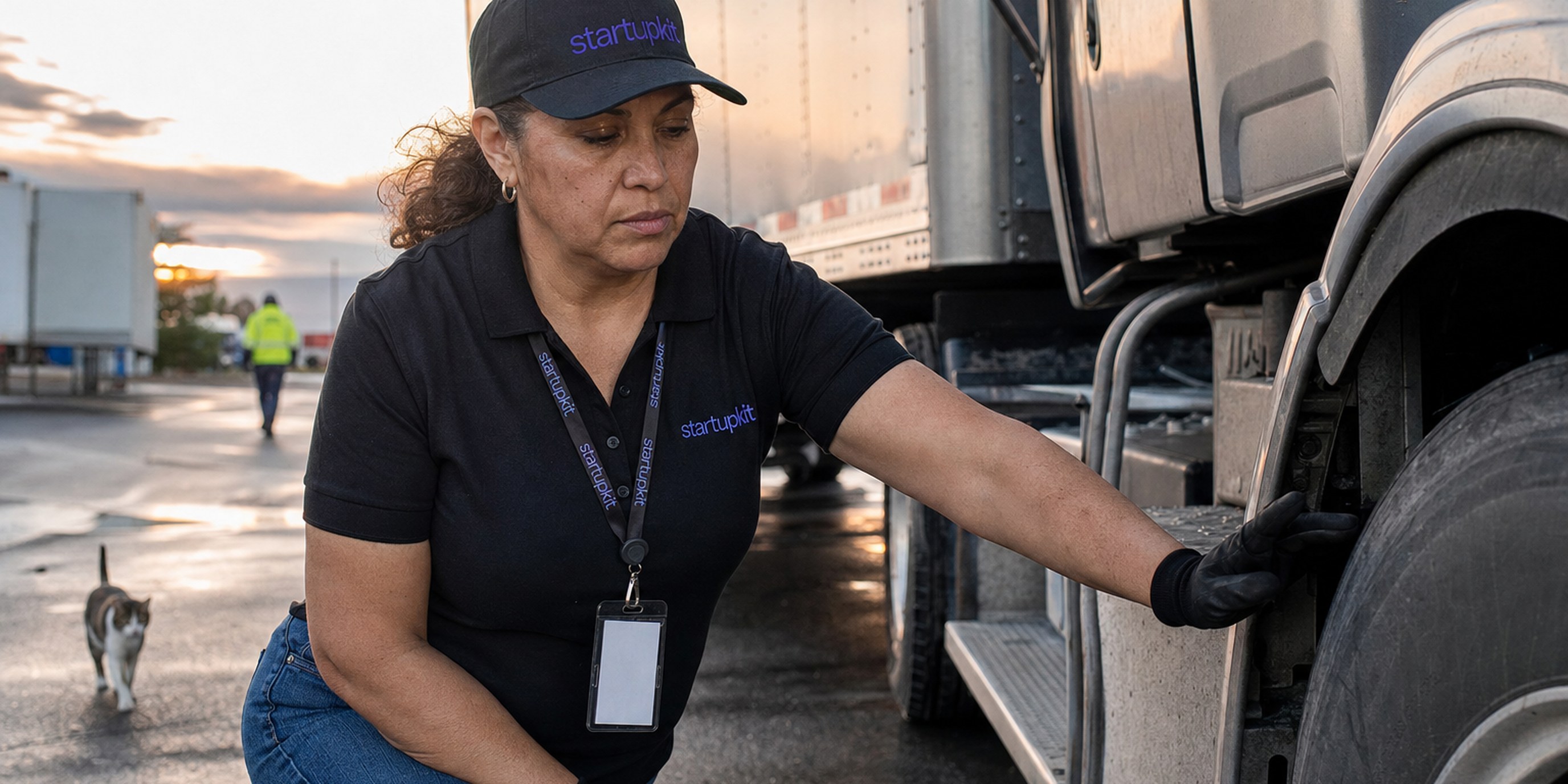
To hire a CDL truck driver, define the route and required credentials (Class A or B, endorsements like HazMat or tanker), write a clear job description, then screen every candidate against the mandatory DOT checks: a pre-employment FMCSA Clearinghouse query, three-year motor vehicle records from each state, prior-employer safety history, a valid medical card, and a road test, before making a fast, competitive offer. The hard part is not finding applicants. It is filling seats quickly with drivers who pass DOT screening and actually stay.
That tension between speed and rigor defines CDL hiring. Heavy and tractor-trailer truck driving is one of the largest occupations in the United States, and most of the hiring you will ever do is replacement hiring against constant churn. This guide covers the market, the credentials and records that matter, how to write a posting that fills seats, where to source, the interview, pay benchmarks, and the mistakes that quietly cost you thousands per empty seat.
What does the CDL truck driver hiring market look like in 2026?
The defining feature of this market is scale plus churn, not net growth. You are almost always replacing drivers, not adding them, and getting each replacement wrong costs thousands.
Heavy and tractor-trailer truck driving employed about 2,235,100 people in 2024, and the Bureau of Labor Statistics projects only 4% growth through 2034 (BLS Occupational Outlook Handbook, SOC 53-3032). Yet the occupation is expected to generate about 237,600 openings every year, overwhelmingly from people leaving the seat, retiring, or moving to other work, not new positions.
The churn concentrates where it hurts. Large for-hire long-haul truckload carriers have reported annual driver turnover near 90%, meaning some fleets effectively replace their entire driving workforce in a year (Logistics Management). Local, dedicated, and private fleets run materially lower, but if you operate long-haul, you are running a continuous pipeline whether you planned for one or not.
Treat the “driver shortage” framing with caution. BLS labor economists argue the market behaves like a competitive labor market with a retention problem, not a structural undersupply (BLS Monthly Labor Review, “Is the U.S. labor market for truck drivers broken?”). Either way, your bottleneck is keeping seats filled, not a missing pool of people.
That makes speed and fit matter. Each lost driver costs an estimated $8,000 to $12,000 or more to replace, counting recruiting, onboarding, training, and lost productivity. A 2024 snapshot pegged the figure near $12,799, with some carriers reporting up to $20,000 once downtime and lost revenue are included (TheTrucker.com; Centerline Drivers). A slow process and a wrong-fit hire both restart that clock.
What does a CDL truck driver actually do?
A CDL truck driver operates a commercial motor vehicle to move freight over local, regional, or long-haul routes while staying compliant with federal safety rules at every step. The job is equal parts driving skill, regulatory discipline, and reliability.
Core duties (BLS OOH and standard carrier job descriptions):
- Operate a tractor-trailer or heavy straight truck over local, regional, or over-the-road (OTR) routes
- Conduct pre-trip and post-trip vehicle inspections, a DOT requirement and a core safety signal
- Plan routes and comply with Hours of Service (HOS) limits, logging duty status on an Electronic Logging Device (ELD)
- Secure, verify, and protect freight; complete bills of lading and delivery paperwork
- Stay in contact with dispatch and report mechanical issues, incidents, and delays
The work environment shapes who stays. OTR routes mean long hours seated, irregular schedules, and days or weeks away from home; local routes are typically home-daily. The role demands physical stamina, and every driver must hold a valid DOT medical certificate confirming fitness to drive.
One distinction matters for your posting. The must-haves are credential- and record-based: CDL class, endorsements, a clean motor vehicle record, a valid medical card, and a clean Clearinghouse. The differentiators are experience-based: route type, freight type, years driving, and accident-free miles. Keep those two lists separate so unqualified applicants self-select out.
Which CDL class and endorsements should you screen for?
Match the license class and endorsements to your equipment and freight, then treat them as hard filters.
Class A vs Class B
| License | Operates | Typical roles |
|---|---|---|
| Class A CDL | Combination vehicles 26,001+ lbs where the towed unit exceeds 10,000 lbs | Tractor-trailers, OTR and most freight hauling |
| Class B CDL | Single vehicles 26,001+ lbs, or towing under 10,000 lbs | Straight trucks, box trucks, dump trucks, many local and delivery routes |
Hiring a Class B holder for a tractor-trailer seat is a non-starter; requiring Class A for a straight-truck route needlessly shrinks your pool (NETTTS). Decide the equipment first, then the class.
Endorsements
Screen for the endorsements your freight actually requires:
- H (HazMat): transporting hazardous materials. Requires a TSA security threat assessment and a knowledge test.
- N (Tanker): transporting liquids or gases in bulk.
- X: combined HazMat plus Tanker, common for fuel and chemical hauling.
- T (Doubles/Triples): pulling multiple trailers. Class A only.
- P (Passenger) and S (School Bus): people-moving roles, less relevant to freight.
Endorsements carry a real pay signal. HazMat and tanker drivers earn roughly 20% to 30% more than non-endorsed drivers (Schneider; CDL Driving Academy). If your freight needs them, budget for the premium up front or the seat stays empty.
One age note that trips up employers: interstate CDL driving requires age 21, intrastate 18. The FMCSA pilot that briefly let some 18- to 20-year-olds drive interstate ended in November 2025, so do not plan sourcing around under-21 interstate drivers as a routine lane.
What DOT screening does every CDL hire require?
CDL drivers performing covered safety-sensitive duties are subject to requirements including 49 CFR Parts 382 and 391. Checks have different deadlines: the Clearinghouse query is required before hiring, while some records must be obtained within 30 days after employment begins. The FMCSA checklist helps identify documents and deadlines. The main areas to check are:
- FMCSA Drug and Alcohol Clearinghouse, pre-employment full query (mandatory). Before hiring, run a full Clearinghouse query with the driver’s electronic consent to check for unresolved drug and alcohol violations. Annual queries are required thereafter (FMCSA).
- Motor Vehicle Record (MVR) from every state. Pull an MVR from each state where the driver held a license in the past three years. For the annual review, obtain a current MVR from the state issuing the license (49 CFR 391.25). It surfaces violations, suspensions, and serious offenses.
- Safety Performance History (SPH), 49 CFR 391.23. Check prior DOT-regulated employment safety history for the past three years. Since January 6, 2023, use the Clearinghouse for drug and alcohol violation history from FMCSA-regulated employers. Direct inquiries remain necessary for employment regulated by other DOT agencies. FMCSA explains the change.
- Pre-employment Screening Program (PSP) report. Optional but valuable: five years of crash data and three years of roadside inspection data from FMCSA.
- CDLIS check, valid DOT medical certificate, a negative pre-employment DOT drug test, and a road test (or accepted equivalent).
The Driver Qualification (DQ) file contains required documents, some of which must be obtained within 30 days of hire. Many records are retained throughout employment plus three years; retention and separate-storage requirements depend on the record type (FMCSA). At volume, this is where manual processes break. Chasing MVRs from multiple states, prior-employer SPH requests, and a Clearinghouse query for every candidate, all inside tight windows, is the real bottleneck, not a lack of applicants.
Use FMCSA systems or qualified vendors to conduct the checks. An ATS can record status and findings, but does not perform the checks or certify compliance. Assign responsibility for verification and authorization to work.
How do you write a CDL truck driver job description that fills seats?
A job description that fills seats does two things well: it states the non-negotiable credentials plainly, and it sets honest expectations about the route so wrong-fit drivers screen themselves out. Vagueness on either point costs you in churn.
Separate the posting into two blocks. The hard requirements: CDL class, specific endorsements, minimum verifiable experience, a clean MVR within your insurer’s limits, and a valid medical card. The route reality: OTR, regional, or home-daily; expected time away; freight and equipment type; pay structure; and home-time policy.
Be specific about home time. Mismatched home-time expectations are among the fastest ways to lose a driver in the first month, restarting the $12,000-plus replacement clock. A driver who wanted home-daily and landed an OTR seat will leave, and you will have paid the full cost of hiring for nothing.
The faster and clearer your posting, the better your applicants and the lower your churn.
A few practical rules:
- State the route type and time away in the first three lines, not at the bottom.
- Quantify experience (“two years OTR, dry van”) rather than writing “experienced driver.”
- List required endorsements explicitly so under-credentialed applicants do not apply.
- Be honest about pay structure (cents per mile, hourly, detention pay) instead of a best-case annual figure no one hits.
A reusable process saves setting up the same stages repeatedly. Adapt Kit’s truck driver template to your interviews, road tests and documentation of checks, then reuse it for subsequent vacancies.
Where do you source CDL drivers?
The best sources for CDL drivers reward continuous relationships over one-off postings, because you are hiring against churn. Spread your sourcing across several channels rather than relying on one.
- Driver-focused job boards and CDL platforms. These reach active drivers searching by route type and freight, which filters better than general boards.
- CDL schools and training programs. Strong for entry-level pipelines, especially with a finishing or mentorship program. New graduates start well below the median wage.
- Referrals and referral bonuses. Existing drivers know other drivers, and referred hires tend to stay longer because a peer set expectations honestly.
- Owner-operator networks. Useful for specialized freight and dedicated lanes.
- Re-engaging past applicants. The most underused source in high-volume hiring. Drivers you screened months ago, who took another offer or were not ready then, are often ready now, and you already have their record on file.
That last point compounds. In a market defined by replacement hiring, the candidates you already qualified are a standing pipeline. The trick is finding them again without re-screening from zero, which is the idea behind mining your applicant database for silver-medalist candidates. Kit’s AI outreach can re-engage past driver applicants automatically, turning your own history into a recurring sourcing channel.
What interview questions surface a safe, reliable driver?
The interview should weight safety judgment and regulatory fluency above everything resume-shaped, then test for reliability and route fit. Recruiters consistently report that CDL class, safety record, FMCSA knowledge, and how a driver handles problems matter far more than polish (Indeed; The Interview Guys). Use a consistent scorecard so confidence does not get mistaken for competence.
Safety and compliance (highest weight):
- “Walk me through your pre-trip inspection. What would make you refuse to roll?” Look for a systematic process and a willingness to red-tag a truck.
- “How do you manage Hours of Service when dispatch pushes for a delivery you cannot legally make on time?” Look for HOS limits respected and a willingness to say no.
- “Tell me about a violation or accident on your record and what changed afterward.” Look for ownership, not deflection, and pair it with the MVR and PSP.
Hands-on competence:
- “Describe handling this freight in bad weather or a tight delivery.” Tailor it to flatbed securement, tanker surge, or reefer temperatures.
- “How do you secure a load so it is compliant and safe?”
Reliability and fit (the retention screen):
- “This is a [regional / OTR / home-daily] route with [X] time away. How does that fit your life right now?” Mismatched home time is a top churn cause; screen for it directly.
- “Why are you leaving your current carrier?” Listen for pay, home time, equipment, and the dispatch relationship.
Two structural points raise the hit rate of any loop. First, pair the questions with a road test or equipment check so claimed skill is verified, not assumed. Second, move fast. Good drivers field multiple offers within days, so a process that drags loses them. The carrier that is both structured and fast wins, which is why long loops are a quiet way to lose your best candidates.
Structured scorecards help multiple recruiters use the same safety criteria. Kit’s team review and voting records assessments in one place. Record who ran the Clearinghouse query and checked the MVR. A scorecard does not replace those checks.
How much do CDL truck drivers make in 2026?
The national median wage for heavy and tractor-trailer truck drivers was $57,440 per year, about $27.62 per hour (BLS OEWS May 2024). The lowest 10% earned less than $38,640, the highest 10% more than $78,800. Treat the median as a planning floor, not a market rate.
Pay varies widely, so benchmark against your specific lane rather than the national figure:
- By endorsement. HazMat and tanker drivers earn roughly 20% to 30% more, with specialized, experienced drivers reaching $90,000 or more (Schneider; Salary.com; CDL Driving Academy).
- By route type. Local routes often pay a lower base but offer better quality of life; OTR, dedicated lanes, and flatbed pay a premium for time away or specialized freight.
- By experience. New CDL graduates start well below the median; experienced, accident-free drivers and owner-operators sit at the top.
- By geography. State-level spread is meaningful, driven by freight density and cost of living.
Anchoring on the median in a tight lane, or skipping the HazMat premium when your freight requires it, leaves seats unfilled. Compensation benchmarking is employer due diligence: gather current figures for your lane, freight type, endorsements, and local market from BLS OEWS and reputable salary data before you set the rate. Advertised salary data in an ATS can supplement these sources, but must be compared with the specific route conditions.
What are the most common mistakes when hiring CDL drivers?
The recurring mistakes all trace back to treating driver hiring as an occasional event instead of a continuous, gated pipeline. Each carries a direct cost in empty seats or compliance risk.
- Treating it as a one-time hire. With turnover near 90% at large long-haul fleets, ad-hoc recruiting guarantees empty seats. Build an always-on pipeline.
- Skipping or rushing the Clearinghouse, MVR, or SPH checks. Missing a mandatory pre-employment Clearinghouse query or an out-of-state MVR is a federal violation and a negligent-hiring exposure. At volume, manual checks slip.
- Being too slow. A multi-week, paperwork-heavy process loses drivers to faster carriers. Speed is a competitive feature.
- Mismatching route and home time. An OTR hire who wanted home-daily churns in 30 days and restarts the replacement clock.
- Under-pricing the seat. Anchoring on the national median in a tight lane, or skipping the endorsement premium, leaves seats empty.
- Ignoring retention at the point of hire. Honest expectations on pay, home time, equipment, and dispatch are the cheapest retention lever you have.
- No structured evaluation. Without a scorecard, safety judgment becomes a gut call, and the wrong signals outrank the right ones.
Frequently asked questions about hiring CDL truck drivers
Short answers to the questions employers ask most when hiring CDL drivers. Each links back to the detailed section above.
What certifications and licenses do you need to hire a CDL truck driver? At minimum, a valid CDL of the right class (Class A for tractor-trailers, Class B for most straight trucks), a current DOT medical certificate, and any endorsements your freight requires, such as H (HazMat), N (Tanker), or X (both). For interstate driving the driver must be 21 or older. Match the class and endorsements to your equipment, then treat them as hard filters.
What screening is legally required before hiring a CDL driver? 49 CFR Parts 382 and 391 cover checks including Clearinghouse, MVR and safety history, medical qualification, drug testing and a road test or accepted equivalent. Check deadlines and exceptions for the particular role. The employer or qualified provider performs these checks; the ATS records findings.
How much does it cost to hire (and replace) a CDL truck driver? Replacing a single driver is estimated at $8,000 to $12,000 or more once recruiting, onboarding, training, and lost productivity are counted, with some carriers reporting up to $20,000 including downtime and lost revenue. A slow process or a wrong-fit hire restarts that clock, which is why speed and honest expectations matter.
How long does it take to hire a CDL truck driver? Faster than most roles, and it has to be: good drivers field multiple offers within days. A structured but quick loop, screening, a road test, then a competitive offer, wins seats that a multi-week, paperwork-heavy process loses to faster carriers.
What is the best way to write a CDL truck driver job description? Separate the posting into hard requirements (CDL class, endorsements, minimum verifiable experience, a clean MVR, valid medical card) and route reality (OTR, regional, or home-daily; time away; freight and pay structure). State route type and home time in the first three lines so wrong-fit drivers screen themselves out.
Hiring CDL drivers at scale with Kit
Continuous replacement hiring against constant churn, with a non-negotiable DOT screening checklist, is exactly the kind of repeatable, high-volume pipeline a modern ATS is built for. The two levers that move the needle, speed-to-hire and disciplined screening, pull against each other unless the pipeline is structured. Kit is an AI-native ATS for startups and lean teams. For driver hiring, the relevant pieces work together:
- Role templates turn a driver pipeline into a reusable setup, so each replacement req starts from a configured flow, not a blank page.
- Structured scorecards with team review and voting help teams use common criteria and record checks performed by the team.
- Magic links give drivers passwordless access to apply and submit documents from a phone on the road.
- Interview scheduling coordinates phone screens and road tests fast, which matters when drivers hold multiple offers.
- Email templates keep high-volume candidate communication consistent, the simplest defense against ghosting.
- AI outreach re-engages drivers you already screened, turning your applicant history into a recurring source.
- MCP integration lets AI assistants help run the pipeline, advancing, screening, and messaging candidates, so an always-on pipeline does not eat a recruiter’s whole week.
Kit does not run DOT, Clearinghouse or MVR checks. The employer or qualified provider verifies documents and authorizes the driver to work. Kit records findings and manages the recruiting process. It also supports job distribution through available integrations and comparison of advertised salary lower bounds, normalized monthly.
If you are hiring drivers against constant turnover, start with a pipeline you can reuse for every seat. Start a free trial and build your first driver hiring template today.
Related articles

Healthcare Bug Bounties Should Start Before a Breach
The Medyc incident shows why medical software vendors need a safe disclosure route and a funded bug bounty before someone exploits a reportable flaw.

How to Hire a Rails Engineer When AI Writes the Code
How to hire a Rails engineer for a startup: define the work, test a safe change in a real-looking app, and score judgment when AI can write the code.

AI Agent Security Incident Triage: Probe or Breach?
Use this AI agent security incident triage guide to preserve probe evidence, verify application access, contain exposure, and contact the right operator.

Human-Owned Recruiting Messages in an AI Hiring Workflow
Make recruiting messages clear and accountable when AI helps draft. Use this review guide for job ads, outreach, process updates, and rejection notes.

SSO Offboarding: A Vendor Checklist Beyond the Login
Use this SSO offboarding checklist to test existing sessions, API tokens, directory delays, and exceptions before accepting a SaaS vendor's access controls.

Leaked Credential Reports: A Practical Closure Checklist
Close a leaked credential report with evidence: remove exposure, invalidate the old secret, prevent recurrence, and document the limits of your impact review.
Try Kit for 30 days.
Hiring, security reports, and training in one account, for teams where none of it is a full-time job. Free for 30 days, card required. Cancel before it ends and you pay nothing.
Get started free