How to Hire a Physical Therapist Assistant (2026 Guide)
How to hire a physical therapist assistant in 2026: PTA salary data, license and CAPTE checks, scope rules, interview questions, and a faster hiring process.

Ernest Bursa
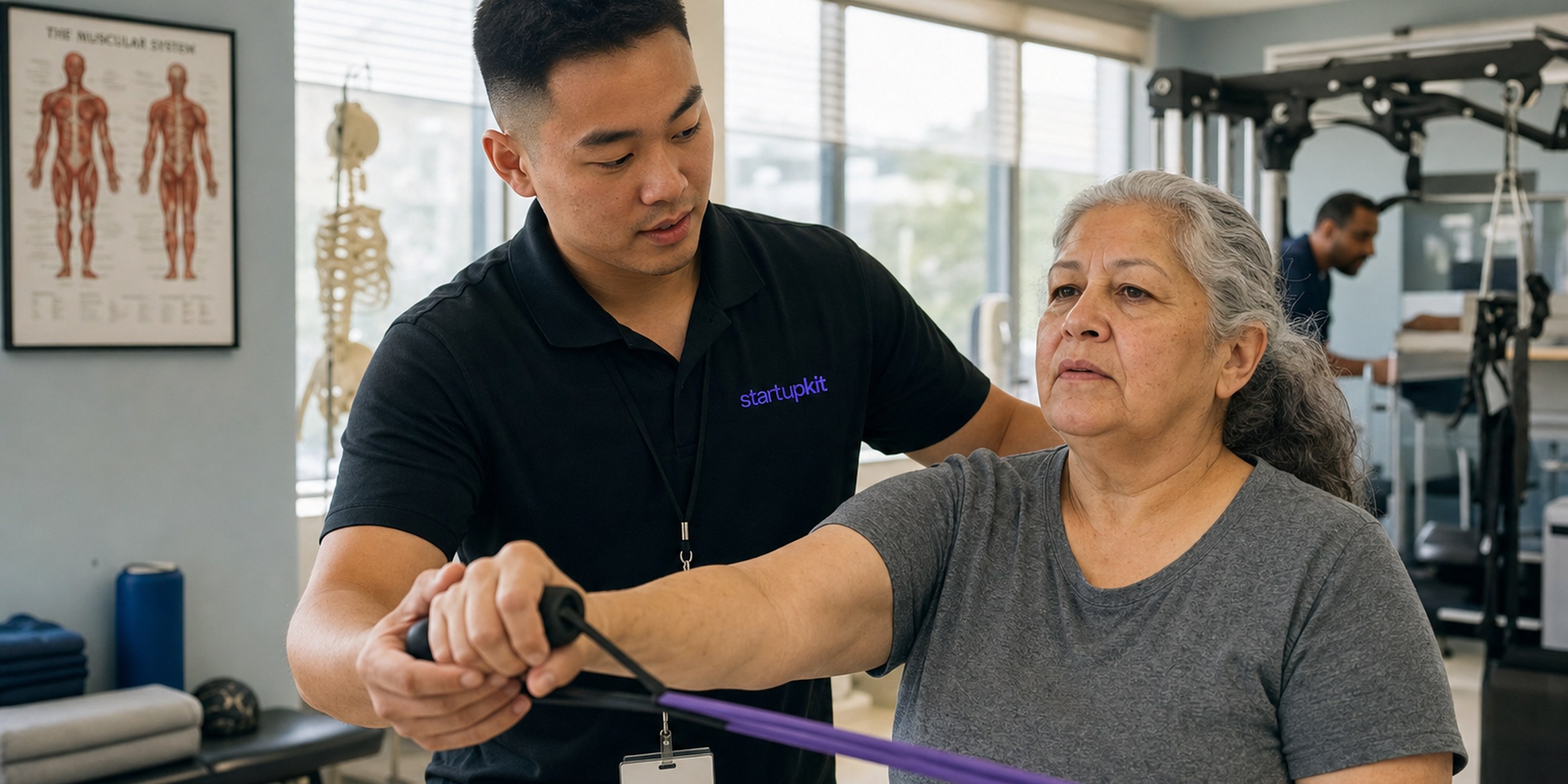
To hire a physical therapist assistant (PTA), verify a CAPTE-accredited associate degree, a passing NPTE-PTA exam score, and a current, unrestricted state license, then screen for clinical competence and patient empathy using scenario-based questions. PTAs earn a national median of $65,510 (BLS, May 2024), and demand for the licensed role is projected to grow 22% through 2034. The hard part is not finding applicants. It is verifying credentials at the source, defining scope correctly in the posting, and moving fast enough to win the candidate before a competing clinic does.
A PTA is leverage on a resource you already pay for: your physical therapist. Every licensed pair of hands lets a supervising PT treat more patients concurrently, which lifts visits per day and shortens the access-to-care wait that drives patients to the clinic across the street. This guide walks through the full hire, from what the role legally can and cannot do to the questions that actually predict on-the-floor performance.
What does a physical therapist assistant do (and how is it different from a PT aide)?
A PTA is a licensed clinician who delivers selected parts of a physical therapy plan of care under the direction and supervision of a licensed physical therapist. The line between “implements the plan” and “creates the plan” is the entire legal definition of the role, and getting it wrong in a job posting attracts the wrong people and creates compliance exposure.
A PTA carries out the hands-on work the PT prescribes (BLS Occupational Outlook Handbook):
- Implements interventions and therapeutic exercises from the PT’s plan of care
- Coaches patients through exercise and functional activities
- Applies modalities within scope, such as ultrasound, e-stim, and heat or ice
- Measures and documents patient progress and response to treatment
- Sets up equipment and maintains a safe, clean treatment area
What a PTA may not do is the other half of the definition. PTAs do not perform the initial evaluation, interpret findings, establish or modify the plan of care, or make re-evaluation and discharge decisions. Those are the supervising PT’s exclusive responsibilities (New York Office of the Professions). Most jurisdictions require on-site PT supervision, though “on-site” does not always mean direct line of sight, and the rules differ by setting (outpatient versus skilled nursing versus home health). Confirm the supervision model against your state practice act before you write the offer.
The PTA-versus-aide distinction matters for hiring and for reading the data. A PT aide is unlicensed, cannot deliver skilled interventions, and handles support tasks like cleaning rooms and transporting patients. Conflating the two in a posting is the most common upstream mistake clinics make. It also explains why some public statistics understate the role, as you will see next.
How much does it cost to hire a PTA in 2026?
PTAs earn a national median wage of $65,510 per year as of BLS OEWS May 2024 data, with the lowest 10% under $46,020 and the highest 10% above $87,630 (BLS). The median is the anchor, but real offers swing widely by metro, setting, and tenure, so do not post the national number as your local range.
Geography drives a large share of the spread. Secondary aggregations of BLS state data put top-paying states well above the national median (Nurse.org, aggregating BLS state OEWS):
| State | Approx. annual (secondary source) |
|---|---|
| Nevada | ~$80,360 |
| California | ~$77,700 |
| Texas | ~$72,060 |
| Georgia | ~$71,830 |
| Massachusetts | ~$71,320 |
Treat those state figures as approximate and secondary-sourced, not BLS-primary. Setting matters too. Home health and skilled nursing facilities typically pay above outpatient orthopedic clinics, and rural or high-cost metros add a premium to overcome local shortages. Seniority compounds it further: PTAs with 10 or more years of experience report averages near $90,000 (Nurse.org).
The practical rule is to benchmark against your local metro OEWS figure and your setting before you publish a number, not the national median. Kit includes compensation research based on advertised salary ranges. Compare any relevant sample with the metro figure from BLS OEWS before setting your range. Underpaying in a shortage market is how you turn a 4-week hire into a 4-month one.
Why is PTA demand outpacing supply?
Demand for the licensed PTA role is projected to grow 22% from 2024 to 2034, far faster than the all-occupations average, which is among the fastest growth rates in healthcare (BLS Employment Projections, 2024-34; BLS Monthly Labor Review overview). That number deserves a footnote, because a careless reader will cite the wrong one.
BLS publishes two related figures. The public Occupational Outlook Handbook headline blends “physical therapist assistants and aides” and reports about 16% growth. That blended rate is dragged down by the unlicensed aide role and understates the licensed PTA you are actually hiring. The standalone PTA code (SOC 31-2021) is the +22% figure, and it is the one this guide uses (BLS OOH). PTAs held about 111,500 jobs in 2024.
The demand driver is structural. An aging population and the rise of chronic conditions like diabetes, obesity, and stroke recovery are expanding the caseload, while the supply of physical therapists cannot keep pace. APTA’s workforce forecast projects PT shortages through 2037, with a 2022 national shortfall of roughly 12,070 PT full-time equivalents, about 5.2% under demand (APTA workforce forecast, Mar 2025). PTAs are the primary lever clinics use to stretch scarce PT capacity, which is exactly why PTA demand outruns the blended rate.
For your clinic, the takeaway is blunt: this is a candidate-scarce market, and speed is a competitive weapon. A slow funnel does not just delay revenue, it loses the hire entirely.
What credentials and licenses must a PTA have?
Every PTA you hire must hold three things: a CAPTE-accredited degree, a passing NPTE-PTA score, and a current, unrestricted state license. Verify all three at the source. This single discipline prevents the worst hiring-and-billing failures, and it takes minutes.
- CAPTE-accredited associate degree. PTAs graduate from a roughly two-year program accredited by the Commission on Accreditation in Physical Therapy Education (CAPTE). Graduates of non-accredited programs cannot be licensed. Confirm the school on CAPTE’s program directory (APTA licensure).
- Passing NPTE-PTA score. The National Physical Therapy Examination for PTAs, administered by the Federation of State Boards of Physical Therapy (FSBPT), requires a scaled score of 600 (on a 200 to 800 scale) to pass. The exam fee is $485 (FSBPT National Exam). Confirm the pass via FSBPT or the state board.
- Current, unrestricted state license. Required in all 50 states, DC, and Puerto Rico. Verify it is active, unrestricted, and valid in the state where your clinic operates. Some states add a jurisprudence exam and a background check (FSBPT Licensure Reference Guide). Check the license number directly on the state board’s online lookup, never a candidate-supplied PDF.
- PT Compact privilege, if you hire for multi-state, travel, or telehealth-adjacent needs. The Physical Therapy Licensure Compact lets eligible PTAs practice in member states without a separate license per state. Eligibility requires an active home-state license in a compact-issuing state and no disciplinary action for two years. Member-state expansion continues, with Pennsylvania implementing the compact on July 7, 2025 (PT Compact). Verify the privilege on ptcompact.org, not a screenshot.
- CPR/BLS certification and any setting-specific requirements for pediatrics, SNF, or other specialties.
The verification habit is the whole game. License lookup, FSBPT, and CAPTE directory: three checks, three official sources. A PTA practicing on an expired or restricted license exposes the clinic to billing clawbacks and board discipline, and “the candidate showed me a certificate” is not a defense.
How do you write a PTA job description that attracts licensed candidates?
A strong PTA posting states the license requirement, the supervision model, and the scope boundary up front, then sells the clinic’s caseload, mentorship, and setting. The goal is to repel aides and underqualified applicants in the first two sentences so your reviewers spend time only on people who can actually be licensed in your state.
Lead the requirements with the non-negotiables, in plain language:
- Active, unrestricted PTA license in [your state] (or PT Compact privilege)
- Graduate of a CAPTE-accredited PTA program
- Current NPTE-PTA pass and CPR/BLS certification
Then describe the real job: the patient population (post-op ortho, neuro, geriatric, sports), the setting (outpatient, home health, SNF), the supervision structure, the daily caseload, and the documentation system. Working clinicians read postings to figure out what their day actually looks like, so specifics beat adjectives. Skip the buzzwords and name the modalities and the EMR.
Be honest about the supervision model, because PTAs evaluate it carefully. A posting that says “work alongside a collaborative PT who mentors progression decisions” tells a candidate more than three paragraphs of culture language. For the broader principles, see our guide on writing job descriptions that don’t sound like every other startup. Vague requisitions are also a documented cause of slow hires, which we break down in why vague requisitions blow up your time-to-fill.
What interview questions actually screen a PTA?
Generic “greatest weakness” prompts predict nothing for a clinical, patient-facing role. Use behavioral and scenario questions that surface three things: clinical reasoning, scope awareness, and patient empathy. The best answers reflexively reference the supervising PT and the plan of care, which is the single clearest signal of a scope-aware hire (Indeed PTA interview questions; Workable PTA Q&A).
Clinical competence
- “Walk me through the exercises and progression you’d use for a post-op total-knee patient at week 2 versus week 6.”
- “Which modalities are you confident applying independently, and which would you flag back to the supervising PT?”
- “A patient’s pain spikes mid-session beyond the expected range. What do you do, and when do you involve the PT?”
Scope and supervision judgment
- “A patient asks you to change their exercise plan because it’s ‘too easy.’ How do you handle it?” The correct answer respects that modifying the plan of care is the PT’s call.
- “How do you document a patient’s response so the supervising PT can adjust the plan effectively?”
Caseload and empathy
- “In a high-volume clinic, how do you prioritize and keep documentation current across a full day?”
- “Tell me about a non-adherent patient and how you kept them engaged.”
- “Describe working with an older adult who has dementia or cognitive impairment.”
Watch for clear red flags: an expired license or non-CAPTE program, vague anatomy or exercise reasoning, claiming the authority to evaluate or change the plan of care (scope overreach), and any answer that shows no patience or empathy. As one practice owner puts it, it is easier to fill gaps in competence than gaps in character (Practice Promotions). Weight the patient-relationship signals, not just the credential checklist.
The hard part is comparing answers consistently when the owner-PT and the clinic manager both interview. Standardized scorecards fix this. When two reviewers rate the same scenario answers against the same criteria, you replace a rushed gut call with a defensible decision, and the research on structured interview scorecards and predictive validity shows why that matters for hire quality.
What mistakes do clinics make when hiring a PTA?
The most expensive mistakes are upstream: wrong stats, wrong scope, and a slow process in a market where slowness loses candidates. APTA’s 2024 outpatient workforce report found that 40% of practices said a vacancy takes three to six months to fill, with lost revenue ranging from $40,000 to $250,000 per vacancy (APTA, Oct 2024). Every week of delay carries a dollar value.
The recurring errors, and the fix for each:
- Citing the blended demand or pay stat. Use standalone SOC 31-2021 figures (+22% growth, $65,510 median), not “assistants and aides.”
- Writing an aide posting and calling it a PTA role. State the license requirement, supervision model, and scope boundary up front.
- Running generic interviews. Use the clinical-scenario and empathy questions above.
- Skipping source verification. Check the state board lookup, FSBPT, and CAPTE directory, not candidate PDFs.
- A slow, multi-week funnel. Compress to days with pre-scheduled interviews and a same-week decision.
- Posting the national median as the local range. Benchmark the local metro OEWS figure and your setting first.
- Misclassifying the role as independent contractor. Employment rules vary by state; confirm employee-versus-contractor status against state law (PT Referral Machine).
The thread running through all seven is the same: this is licensed allied-health hiring in a shortage market. Precision and speed both pay, and the clinics that lose candidates usually lose them to a slow process, not a low salary.
How do you fill the role faster without sacrificing quality?
The way to beat the three-to-six-month vacancy clock is to fix the part of the funnel you fully control: everything after the application lands. Most “how to hire a PTA” advice points you at job boards and staffing agencies, which is sourcing. The bottleneck for clinics is usually not applicants, it is the days lost between application and offer, scheduling delays, credential chasing over email, and slow team alignment.
This is where an applicant tracking system built for small employers earns its keep. Kit is an AI-native ATS priced per seat, designed for the clinic owner or rehab director who does not have a dedicated recruiter. A role template gives a non-recruiter a pre-configured PTA pipeline, with a license-verification stage, scenario-based interview steps, and a structured scorecard, so you go from “I need a PTA” to a live process in minutes instead of building one from scratch. Built-in interview scheduling collapses the back-and-forth that normally adds a week, and email templates keep candidates warm so the strong ones do not drift to a competing offer.
Team review and voting solve the alignment problem directly. The owner-PT and the clinic manager score the same clinical and empathy signals, see each other’s notes, and reach a decision together rather than one person making a rushed call. Magic-link candidate access keeps the experience friction-free for working clinicians applying between shifts, no password to reset at 9pm. And because Kit’s AI works through MCP, you can have an AI assistant move applications forward, summarize candidates, and draft outreach inside the same pipeline. Kit also includes job distribution options and compensation research. Check supported destinations and the relevance of the salary sample to your clinic and role.
If your last PTA search dragged for months, the fix is rarely a bigger sourcing spend. It is a tighter, faster process that respects the candidate’s time. We made the broader case for this in why you should own your hiring funnel.
Frequently asked questions about hiring a PTA
Short, direct answers to the questions clinic owners and rehab directors ask most when hiring a physical therapist assistant.
How much does a physical therapist assistant make in 2026?
PTAs earn a national median wage of $65,510 per year as of BLS OEWS May 2024 data, with the lowest 10% under $46,020 and the highest 10% above $87,630. Pay varies widely by state and setting, so benchmark against your local metro OEWS figure rather than the national median.
What is the difference between a PTA and a PT aide?
A PTA is a licensed clinician who delivers selected parts of a physical therapy plan of care under PT supervision. A PT aide is unlicensed, cannot perform skilled interventions, and handles support tasks like cleaning rooms and transporting patients. Conflating the two in a posting is the most common hiring mistake.
What credentials does a PTA need?
Every PTA needs three things, verified at the source: a CAPTE-accredited associate degree, a passing NPTE-PTA exam score (600 on a 200 to 800 scale), and a current, unrestricted state license. CPR/BLS certification and a PT Compact privilege may also apply depending on your state and staffing model.
Can a PTA work in multiple states?
Yes, if they hold a PT Compact privilege. The Physical Therapy Licensure Compact lets eligible PTAs practice in member states without a separate license per state, provided they have an active home-state license in a compact-issuing state and no disciplinary action for two years. Always verify the privilege on ptcompact.org.
How long does it take to hire a PTA?
It varies widely. APTA’s 2024 outpatient workforce report found 40% of practices said a vacancy takes three to six months to fill, with lost revenue of $40,000 to $250,000 per vacancy. Most of that delay is post-application: scheduling, credential chasing, and slow team alignment, which is the part a tighter process can compress to days.
Do PTAs need to be supervised?
Yes. PTAs can only deliver interventions from a PT’s plan of care under that PT’s direction and supervision. They cannot perform the initial evaluation, modify the plan, or make discharge decisions. Supervision rules differ by state and setting, so confirm the model against your state practice act before writing the offer.
The short version
Hiring a PTA well comes down to a few disciplined habits. Verify the three credentials at the source: a CAPTE-accredited degree, a passing NPTE-PTA score, and a current, unrestricted state license. Write a posting that states scope and supervision up front so you attract licensed clinicians, not aides. Screen with clinical-scenario and empathy questions, scored consistently across your interviewers. Benchmark your offer against the local metro figure, not the $65,510 national median. And move fast, because in a market with 22% projected growth and three-to-six-month vacancies, speed is the difference between a hire and a miss.
A PTA is not a junior PT. It is the leverage that lets your physical therapist treat more patients, raise clinic throughput, and shorten the wait that sends patients elsewhere. Treat the hire with that weight, and run a process that matches it.
When you are ready to turn this into a working pipeline, start a free trial and use a role template to get a structured PTA process live the same day.
Related articles

Healthcare Bug Bounties Should Start Before a Breach
The Medyc incident shows why medical software vendors need a safe disclosure route and a funded bug bounty before someone exploits a reportable flaw.

How to Hire a Rails Engineer When AI Writes the Code
How to hire a Rails engineer for a startup: define the work, test a safe change in a real-looking app, and score judgment when AI can write the code.

AI Agent Security Incident Triage: Probe or Breach?
Use this AI agent security incident triage guide to preserve probe evidence, verify application access, contain exposure, and contact the right operator.

Human-Owned Recruiting Messages in an AI Hiring Workflow
Make recruiting messages clear and accountable when AI helps draft. Use this review guide for job ads, outreach, process updates, and rejection notes.

SSO Offboarding: A Vendor Checklist Beyond the Login
Use this SSO offboarding checklist to test existing sessions, API tokens, directory delays, and exceptions before accepting a SaaS vendor's access controls.

Leaked Credential Reports: A Practical Closure Checklist
Close a leaked credential report with evidence: remove exposure, invalidate the old secret, prevent recurrence, and document the limits of your impact review.
Try Kit for 30 days.
Hiring, security reports, and training in one account, for teams where none of it is a full-time job. Free for 30 days, card required. Cancel before it ends and you pay nothing.
Get started free